


Marketing has never been more accessible.
Businesses today can launch campaigns, build websites, publish content, run advertisements, and engage with customers across multiple channels faster than ever before.
Yet many growing businesses still struggle to generate consistent results.
The problem often isn’t the quality of execution.
It’s the absence of strategic direction.
Many organisations spend significant time deciding how to market before answering why, who, and what.
That approach creates tactical marketing instead of strategic marketing.
What Is Tactical Marketing?
Tactical marketing focuses on individual activities rather than the overall direction of the business. It includes launching campaigns, creating social media content, running paid advertisements, optimising websites, and improving email open rates.
While each of these activities can contribute to business growth, they often become disconnected when there is no overarching strategy guiding them. As a result, businesses remain busy executing marketing initiatives but struggle to achieve consistent, long-term results because every tactic operates in isolation rather than supporting a common objective.
The Hidden Costs
When strategy is missing, the consequences are often invisible at first.
Marketing teams produce more content.
Budgets increase.
New channels are added.
Yet growth remains inconsistent.
Some common symptoms include:
- Campaigns that deliver short-term results but fail to build long-term momentum.
- Different teams communicating different messages.
- Customers struggling to understand the company’s unique value.
- Marketing budgets spread across too many initiatives.
- Decisions driven by urgency rather than priorities.
Over time, these small inefficiencies compound into significant business costs.
Strategy Creates Alignment
A well-defined marketing strategy doesn’t eliminate execution.
It improves it.
When strategic decisions are made first, every tactical activity becomes more focused.
Instead of asking:
“Which platform should we use?”
Businesses begin asking:
“Which customers are we trying to influence?”
Instead of:
“How often should we post?”
They ask:
“What business objective does this support?”
This shift changes marketing from a collection of activities into a business capability.
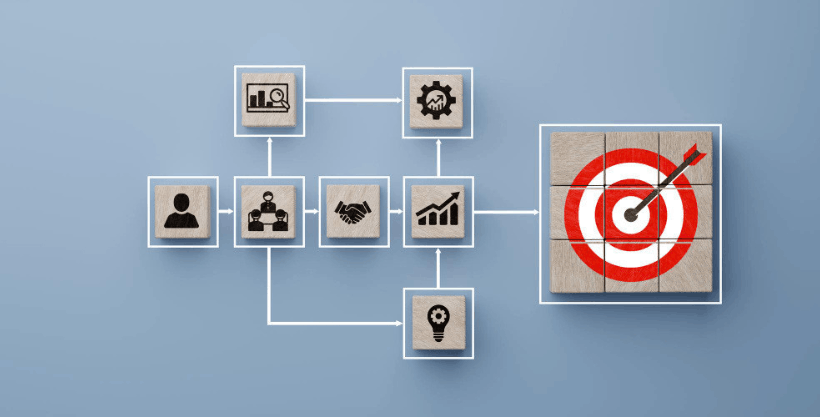
Four Questions Every Business Should Answer
Before investing in any campaign, every business should have clarity on four questions:
1. Who is our ideal customer?
Knowing everyone isn’t the same as serving everyone.
Clear customer definition improves messaging, product positioning, and marketing efficiency.
2. Why should customers choose us?
Competitive advantage should be obvious.
If customers struggle to explain what makes your business different, marketing becomes increasingly difficult.
3. What business objective are we supporting?
Marketing should contribute to measurable business outcomes.
Lead generation, customer retention, brand awareness, and revenue growth require different strategies.
4. How will we measure success?
Metrics should extend beyond clicks and impressions.
Businesses should evaluate whether marketing is improving customer understanding, positioning, and long-term growth.
Execution is Easier When Strategy is Clear
One of the biggest misconceptions is that strategy slows businesses down. In reality, a clear strategy accelerates execution by enabling faster decisions, more consistent campaigns, better resource allocation, and clearer customer messaging. Sustainable business growth is built on strong marketing foundations, not isolated tactics.
While execution, creativity, and technology all play an important role, they cannot consistently compensate for weak strategic thinking. Businesses that establish clarity before execution are better positioned to compete, adapt, and achieve long-term growth.
Final Thoughts
Marketing is no longer just about doing more.
It’s about making better decisions.
For growing businesses, the real competitive advantage isn’t simply producing more campaigns or publishing more content.
It’s building the strategic foundation that allows every marketing activity to work together toward a common business objective.
The strongest marketing results rarely come from better tactics alone.
They come from better thinking.