


For many SMBs, marketing often feels like a never-ending list of tasks.
Post on LinkedIn. Run ads. Update the website. Send emails. Launch campaigns.
Despite staying busy, growth remains unpredictable.
The challenge isn’t usually a lack of effort. It’s a lack of structure.
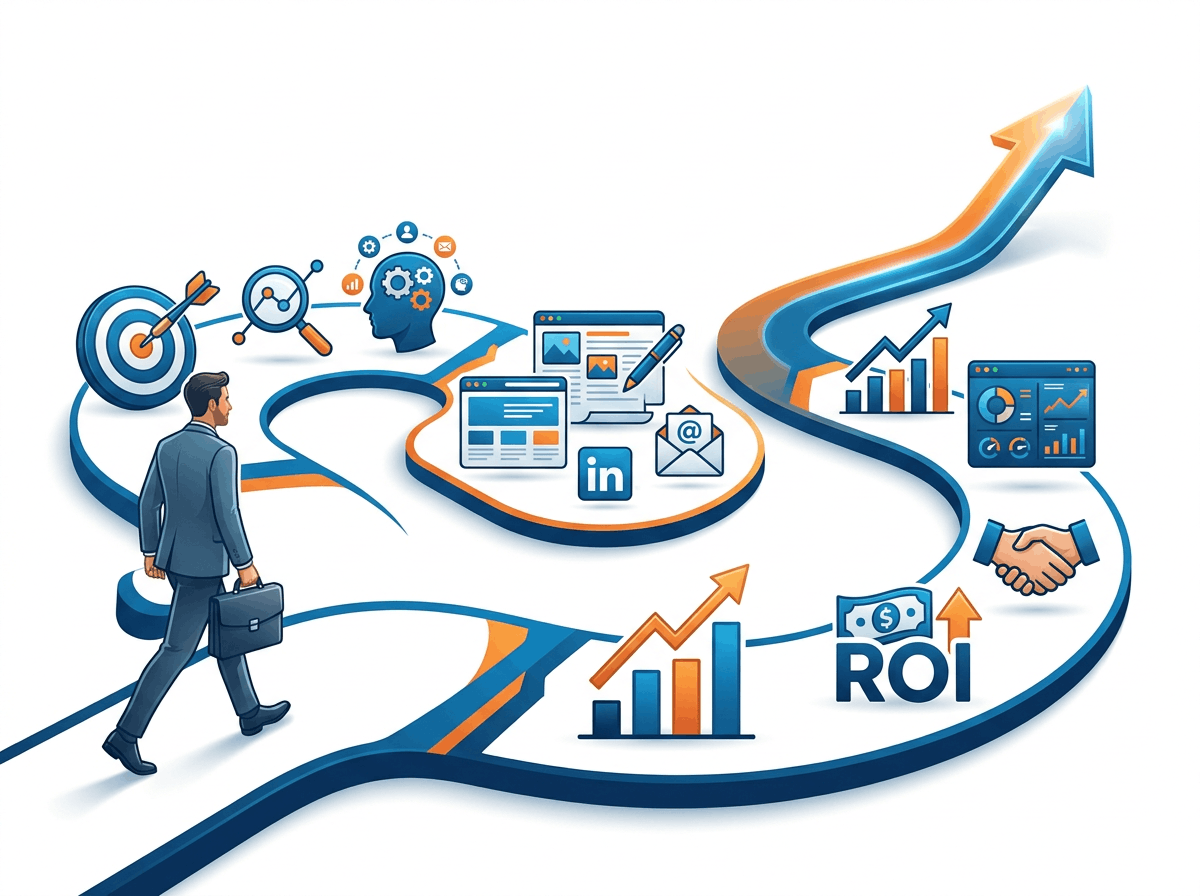
Successful marketing isn’t built on isolated tactics. It’s built on a clear roadmap that aligns business goals, customer needs, messaging, and execution.
If you’re looking to create a more predictable growth engine, here’s a practical 90-day marketing roadmap that can help.
Days 1–30: Build the Foundation
Before launching new campaigns, focus on building clarity.
Many businesses rush into execution without fully understanding who they’re targeting, what makes them different, and where growth opportunities exist.
Define Your Business Goals
Start by answering:
- What are your revenue targets?
- How many leads do you need?
- Which products or services drive the highest value?
- What does success look like in the next 12 months?
Marketing becomes more effective when tied directly to business outcomes.
Understand Your Ideal Customer
Review your best customers and identify:
- Industries
- Company sizes
- Decision-makers
- Common challenges
- Buying motivations
The clearer your audience definition, the more effective your marketing becomes.
Clarify Positioning
Many SMBs sound exactly like their competitors.
Avoid generic messaging such as:
- Quality services
- Customer-focused approach
- Industry expertise
Instead, define:
- Why customers should choose you
- What makes your approach different
- Which problems you solve best
Strong positioning creates stronger demand.
Audit Existing Marketing Assets
Review:
- Website
- Social media channels
- Marketing collateral
- CRM
- Email database
- Analytics setup
Identify gaps before investing in new initiatives.
Goal of Days 1–30: Create strategic clarity and establish a strong foundation.
Days 31–60: Build Demand Generation Systems
Once the foundation is in place, focus on creating a repeatable lead-generation process.
Optimize Your Website
Your website should do more than look professional.
It should:
- Clearly communicate value
- Address customer pain points
- Include strong calls-to-action
- Capture leads effectively
Think of your website as a sales tool, not a digital brochure.
Develop Content Themes
Create content around topics your audience cares about.
Examples include:
- Industry trends
- Customer challenges
- Best practices
- Success stories
- Expert insights
Consistent content builds trust and visibility over time.
Strengthen Your LinkedIn Presence
For many SMBs, LinkedIn is one of the most valuable marketing channels.
Focus on:
- Thought leadership
- Educational content
- Customer success stories
- Industry commentary
People engage with expertise more than promotion.
Implement Lead Capture Processes
Create clear pathways for visitors to become leads through:
- Contact forms
- Consultation requests
- Downloadable resources
- Newsletter subscriptions
Every marketing activity should support lead generation.
Goal of Days 31–60: Build visibility, attract prospects, and create lead-generation systems.
Days 61–90: Optimize and Scale
Now that the foundation and systems are in place, it’s time to improve performance and create momentum.
Align Sales and Marketing
One of the biggest growth barriers for SMBs is misalignment between teams.
Ensure both teams agree on:
- Lead quality standards
- Customer profiles
- Funnel stages
- Follow-up processes
Better alignment leads to higher conversion rates.
Measure What Matters
Move beyond vanity metrics.
Track:
- Leads generated
- Conversion rates
- Customer acquisition cost
- Marketing ROI
- Revenue influenced by marketing
Data helps identify what deserves more investment.
Double Down on What Works
Not every channel will perform equally.
After reviewing performance:
- Increase investment in top-performing channels
- Improve high-performing content
- Refine messaging
- Remove low-impact activities
Growth often comes from optimization rather than adding more tactics.
Build Internal Marketing Capability
The most successful SMBs don’t rely entirely on external support.
Invest in:
- Team training
- Marketing processes
- Documentation
- Performance reviews
Capability creates long-term growth.
Goal of Days 61–90: Improve efficiency, optimize results, and prepare for scaling.
What Success Looks Like After 90 Days
By the end of 90 days, SMBs should have:
✓ Clear positioning
✓ Defined target audience
✓ Stronger messaging
✓ Improved website performance
✓ Consistent content creation
✓ Better lead-generation processes
✓ Sales and marketing alignment
✓ Meaningful performance measurement
Most importantly, you’ll have a marketing system designed for growth—not just activity.
Final Thoughts
Marketing success rarely comes from doing more.
It comes from doing the right things in the right order.
The first 30 days create clarity.
The next 30 days create momentum.
The final 30 days create optimization and scale.
For SMBs, a structured 90-day roadmap provides something every growing business needs:
A repeatable path to sustainable growth.